Photography Tour to the Outer Hebrides: Lewis and Harris, Scotland
7 days | 13 March 2027–19 March 2027
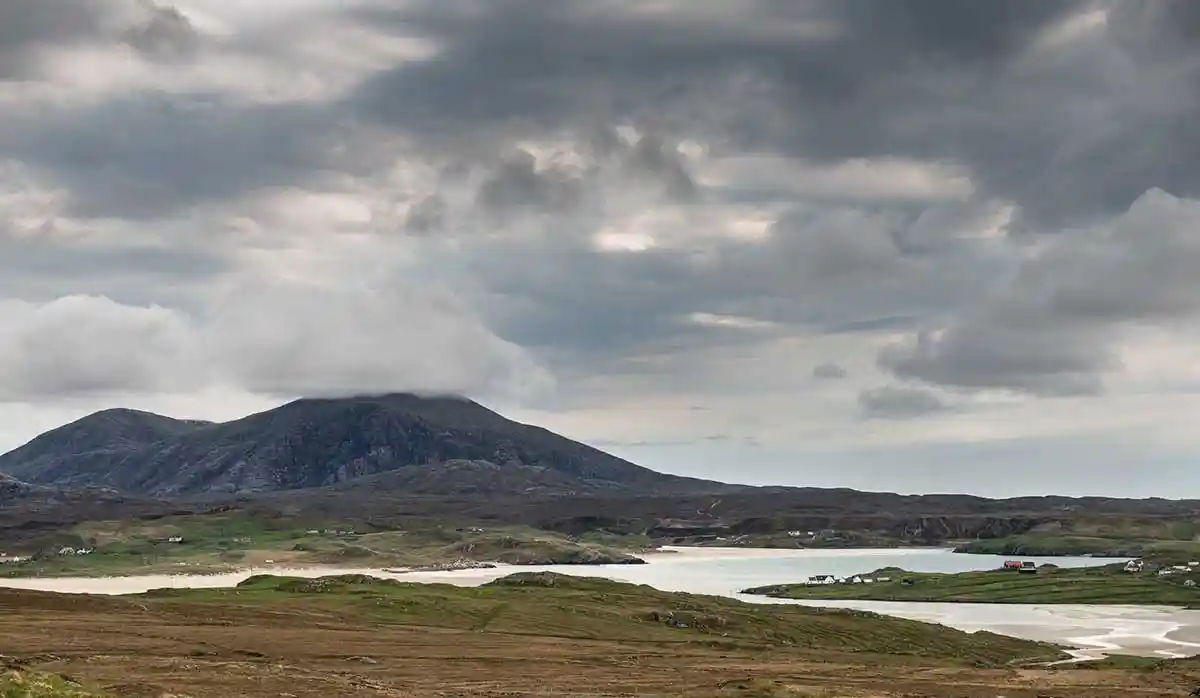
The connected islands of Lewis and Harris offer some of the most diverse and awe-inspiring landscapes in Scotland. From rugged sea stacks, cliffs and the power of the Atlantic coast to vast, peaceful beaches, Neolithic standing stones and the remains of historic crofts and stone boundary walls, Lewis and Harris have it all. The rugged interior is formed from some of the oldest rocks on Earth, while wildlife includes thousands of red deer, Highland cattle and a wide variety of coastal birds. Our March dates are ideally timed to capture the Outer Hebrides in the transition from winter to early spring, when dramatic light, fast-changing weather and evolving seasonal textures create some of the most atmospheric conditions of the year.
Are you a passionate landscape photographer who loves dramatic light, rugged weather and some of the most inspiring scenery on Earth? Join Garth Lenz, National Geographic contributor, on this Nature Talks photography tour.
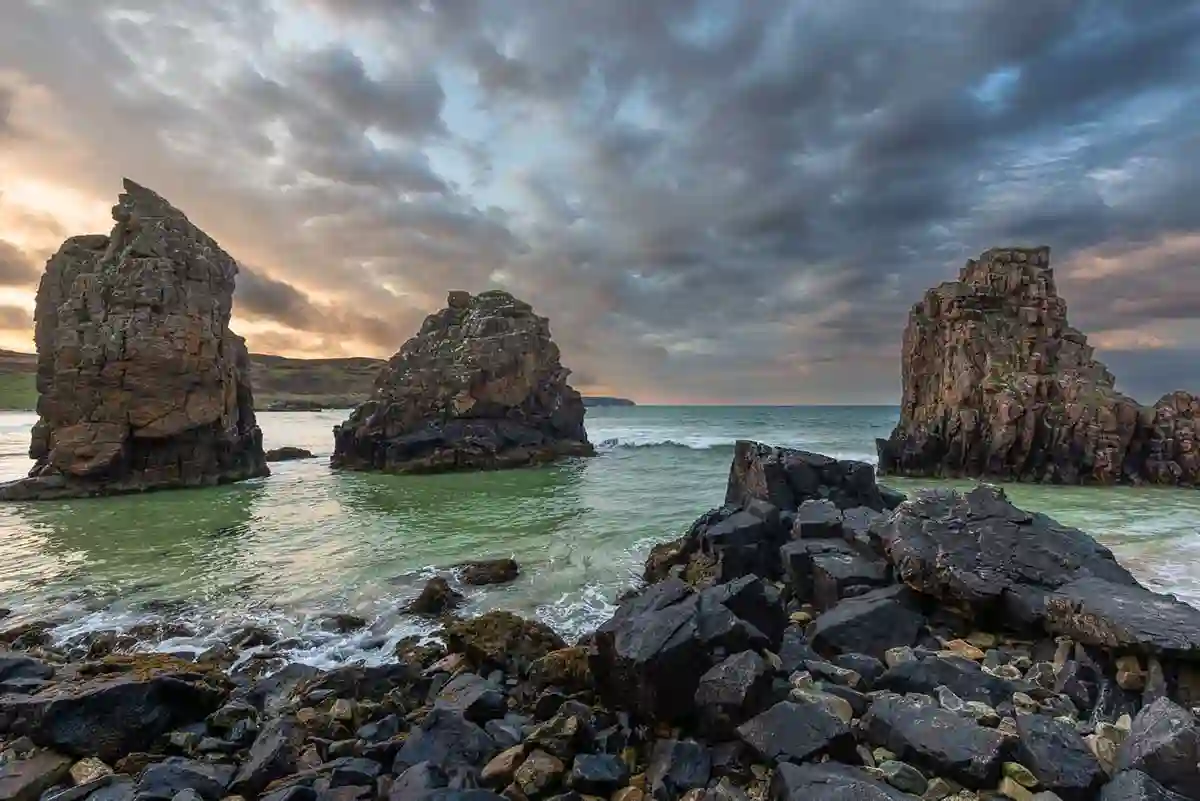
Tour Highlights
- 7-day small-group landscape photography tour in Scotland’s Outer Hebrides
- Guided by Garth Lenz
- Flexible itinerary based on weather, tides and light
- Photograph beaches, sea stacks, cliffs, standing stones, lochans and historic crofting landscapes
- Learn composition, long-exposure photography, filter use, visual storytelling and post-processing
- Based in Tarbert for easy access to both Harris and Lewis
- Includes image reviews and personal guidance in the field
Why Photograph the Isles of Harris & Lewis in March?
The islands of Harris and Lewis offer some of the most rewarding landscape photography in Scotland. In March, the Outer Hebrides begin their transition from winter to early spring, bringing low directional light, fast-changing weather, dramatic cloud formations and a wild Atlantic atmosphere. These conditions are ideally suited to seascapes, coastal details, long exposures and storytelling-led landscape photography. It is a rewarding season for photographers who love texture, movement, mood and the unpredictable beauty that makes Scotland so compelling to photograph.
Best Photography Locations on Harris & Lewis
Luskentyre, Seilebost, Scarista and Horgabost Beaches
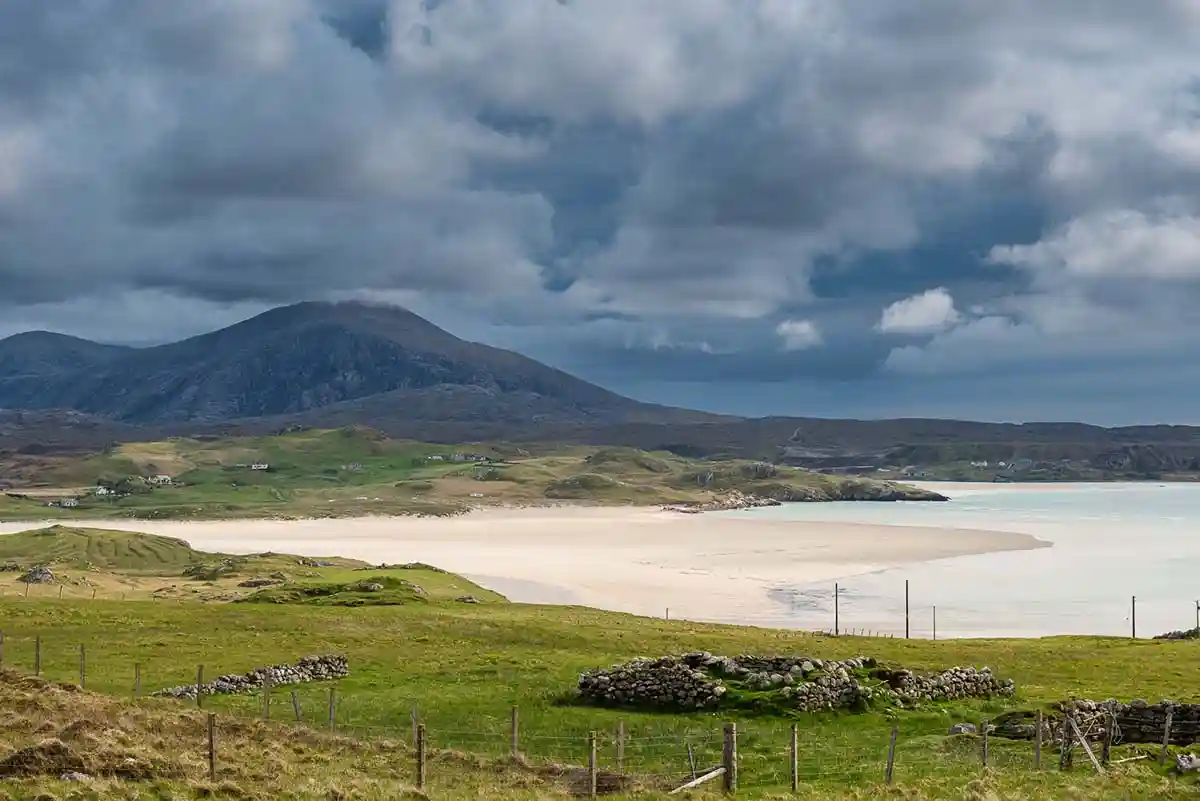
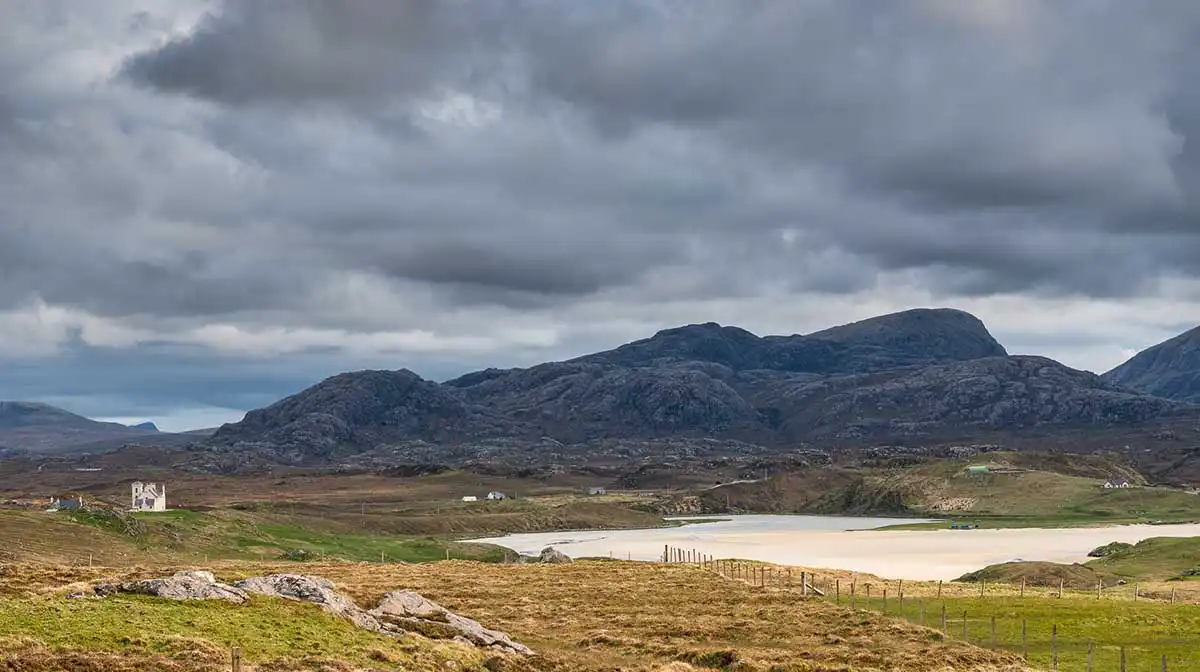
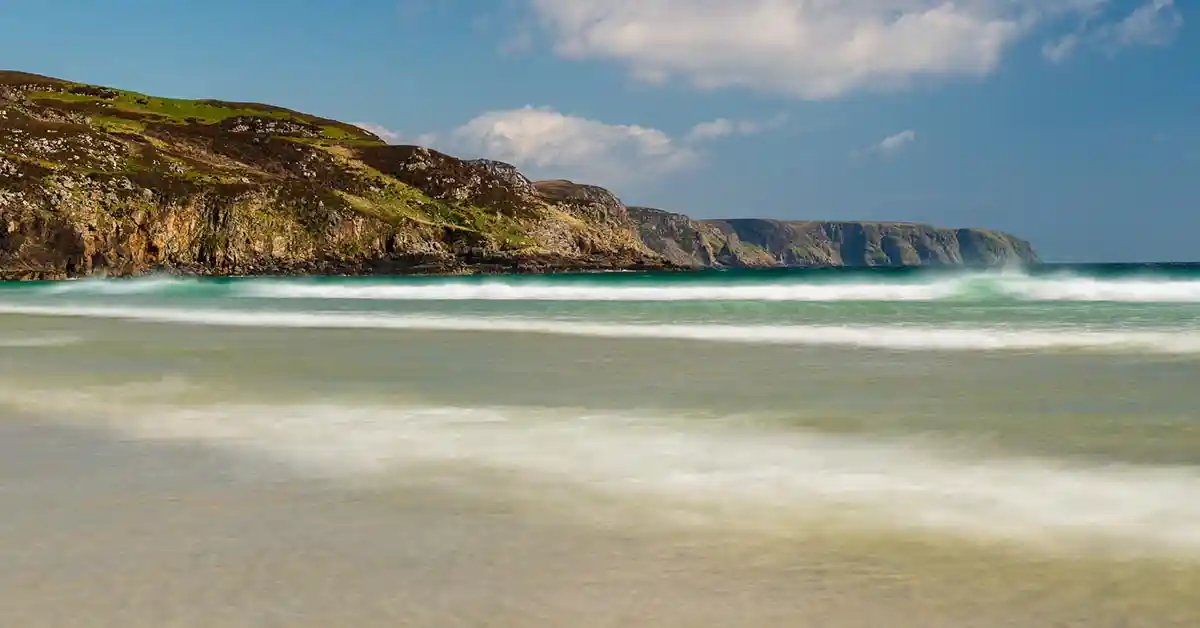
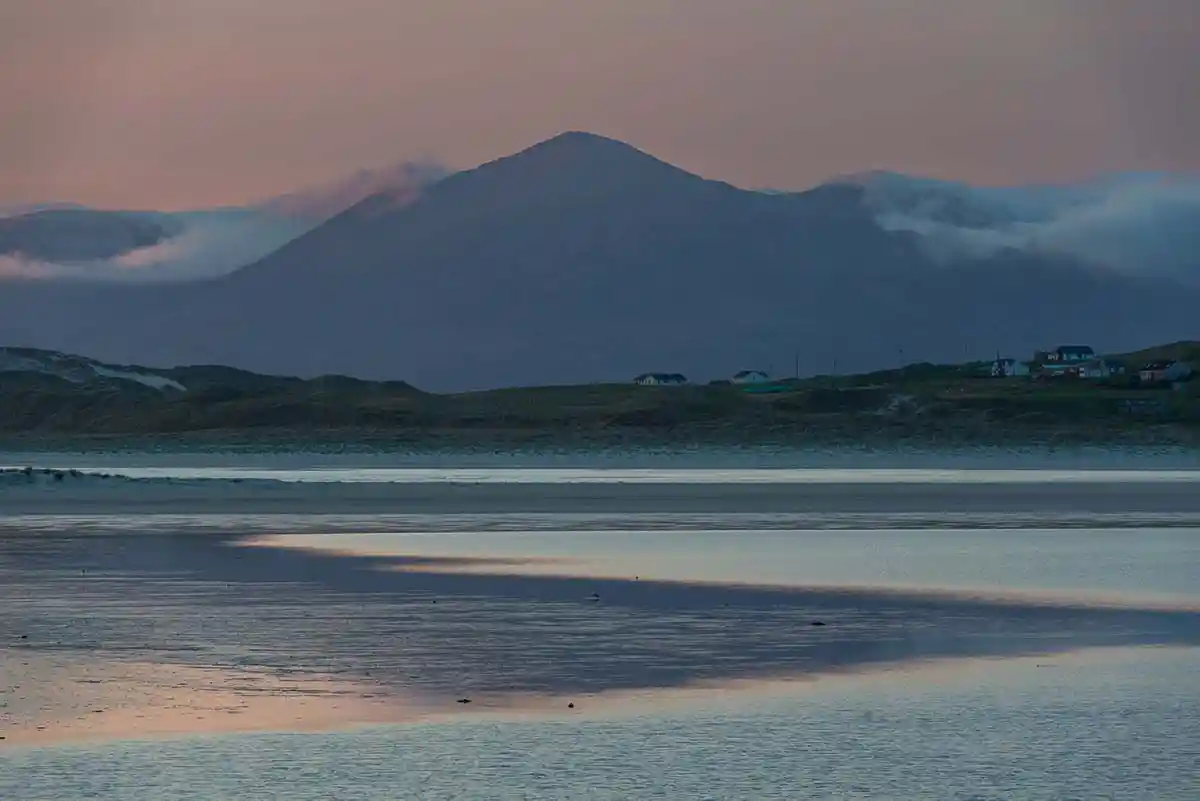
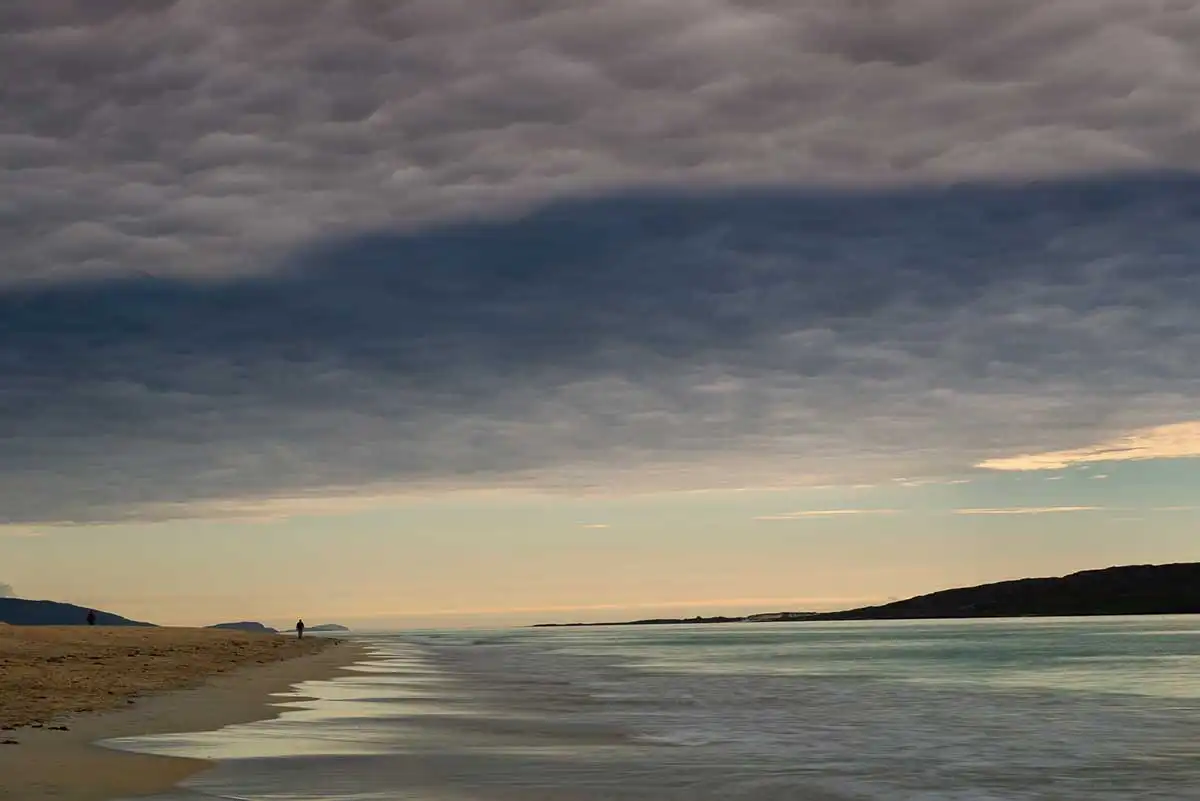
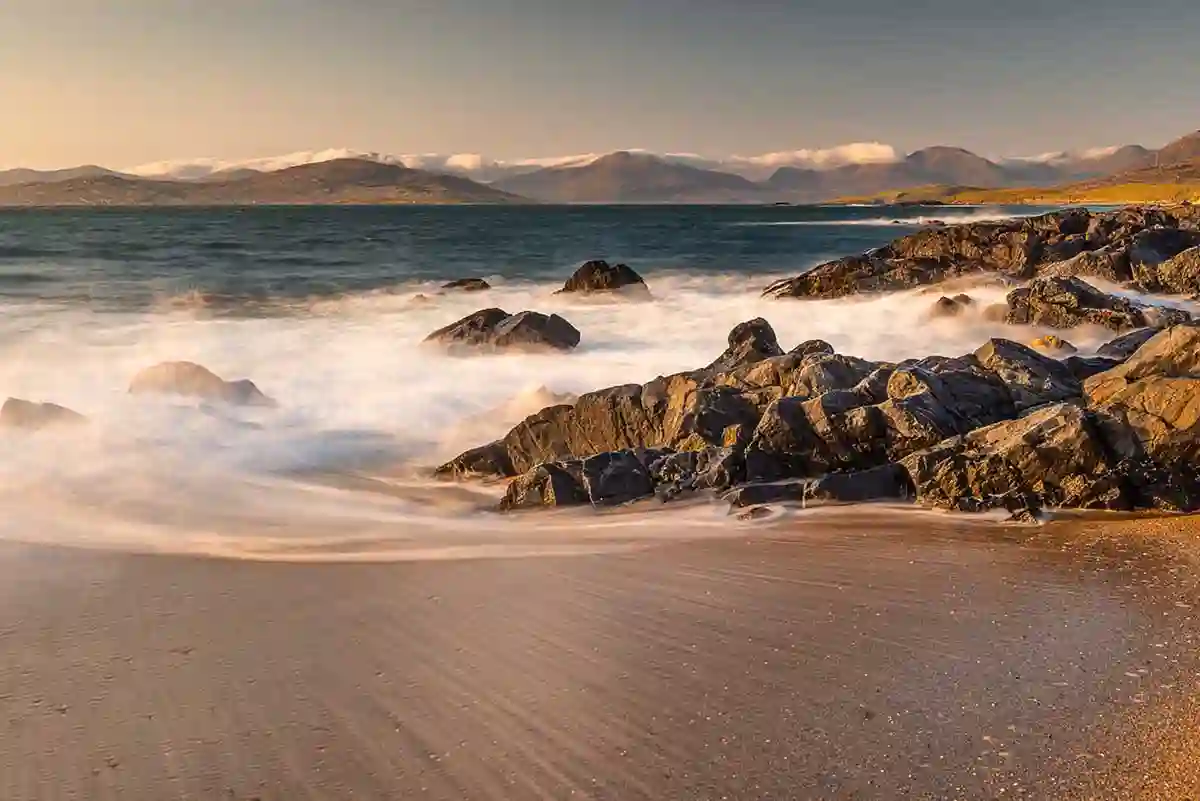
Our accommodation in Tarbert is perfectly located just a short drive from South Harris’s stunning beaches—Luskentyre, Seilebost, Scarista and Horgabost. With turquoise waters, white sands and sculpted dunes, each beach offers its own unique atmosphere. From minimalist compositions and long exposures to the creative possibilities offered by shifting light, these coastal landscapes provide endless inspiration and opportunities to experiment with different techniques while developing your own photographic style.
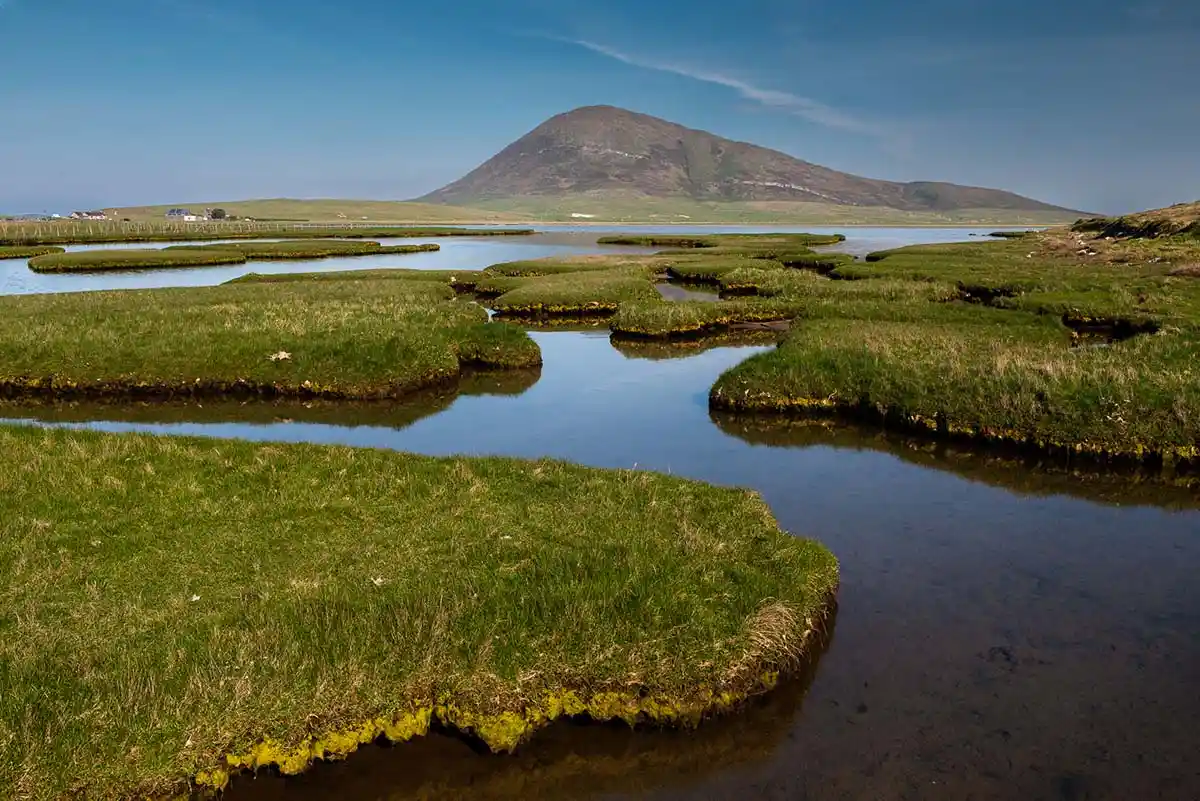
We will also explore the picturesque 16th-century harbour village of Rodel, the Northton Salt Marshes—with their many abstract compositional opportunities—and the remains of ancient settlements and crofting communities scattered across the landscape.
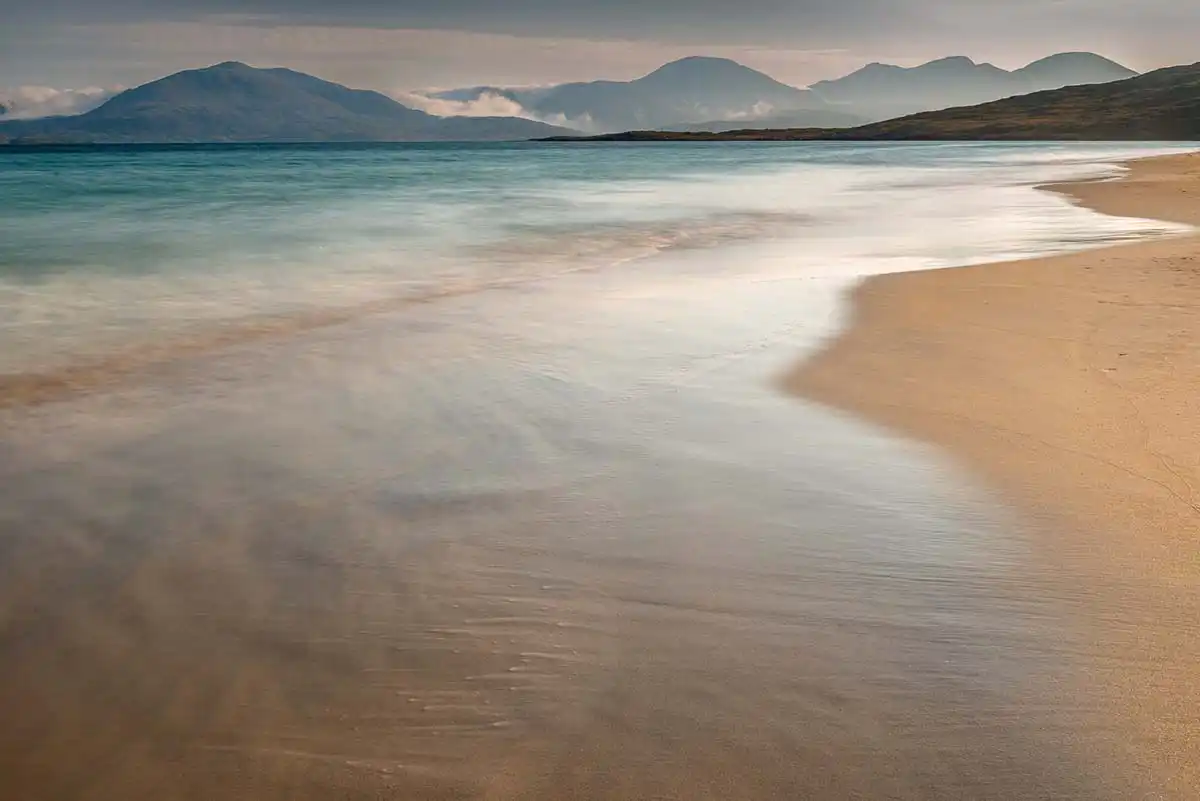
Mangersta, Stac a’ Phris and the Butt of Lewis
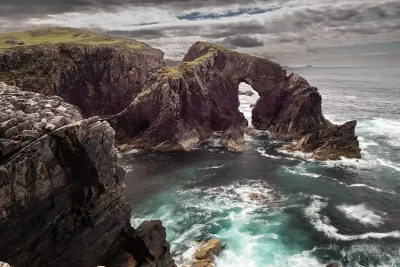
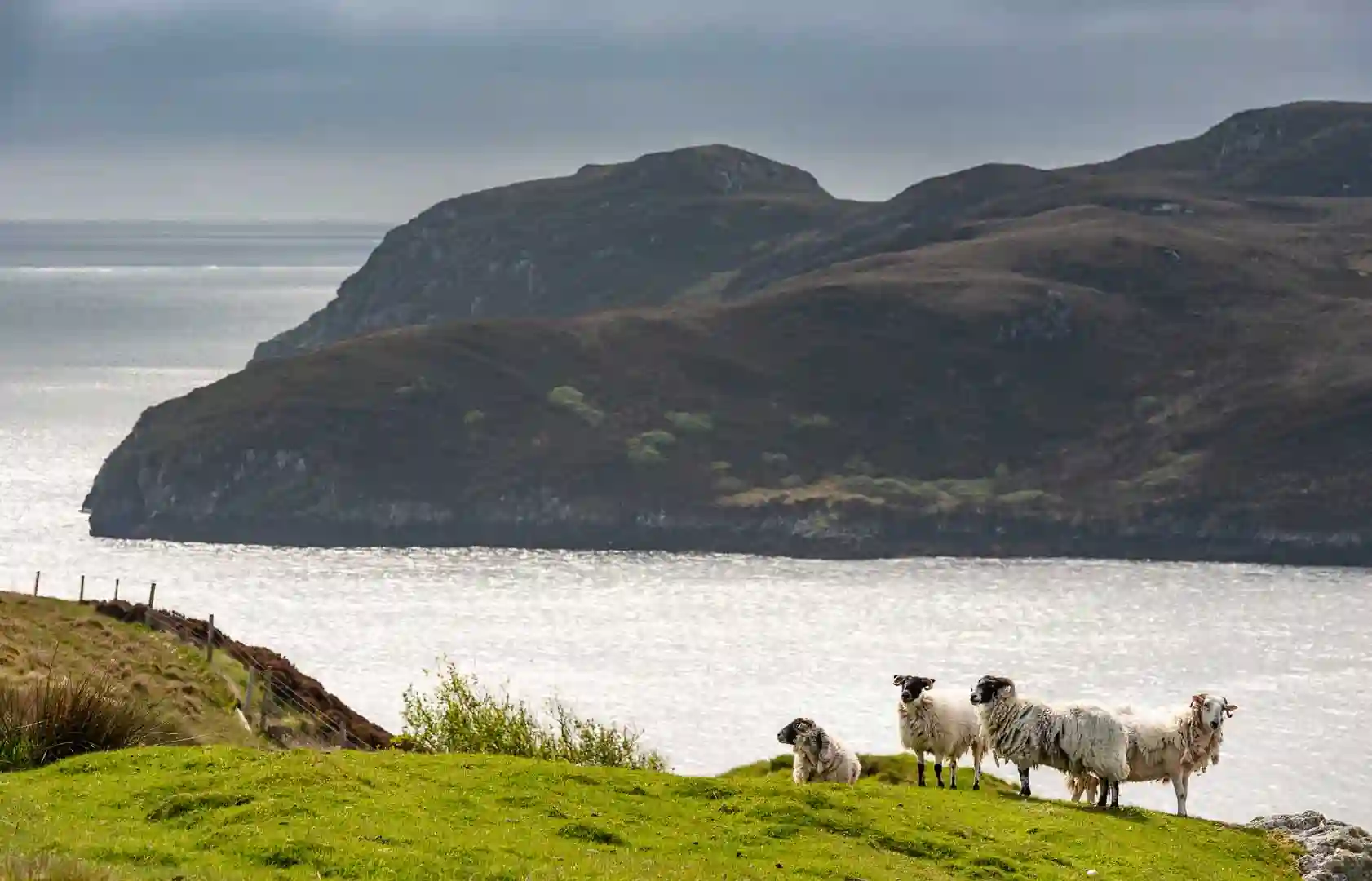
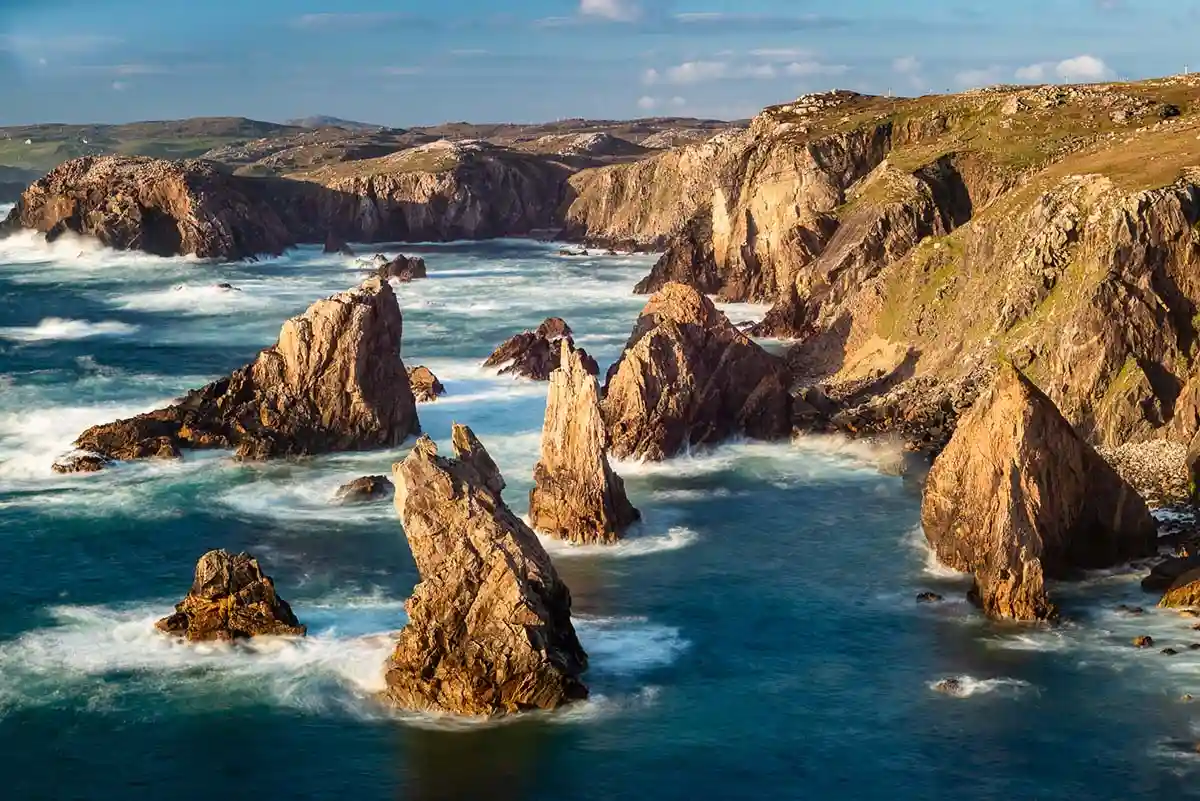
The wild coast of Lewis has been sculpted by the power of the Atlantic, creating dramatic cliffs and timeless sea stacks. These include some of Britain’s most iconic seascapes. At Mangersta, towering stacks rise near the pristine white sands of Mangersta Beach, where seabirds are regularly seen and dolphins may occasionally be spotted offshore. Further north, the iconic Stac a’ Phris sea arch stands as a natural monument to the ocean’s power. At the island’s northern edge, the Butt of Lewis looks out over rugged seas and sea stacks, with its solitary lighthouse surrounded by the raw power of the Atlantic Ocean. On the east coast, at low tide, we may also walk among the sea stacks at Garry Beach and explore its beautiful white sands.
Callanish Standing Stones and Historic Crofting Landscapes
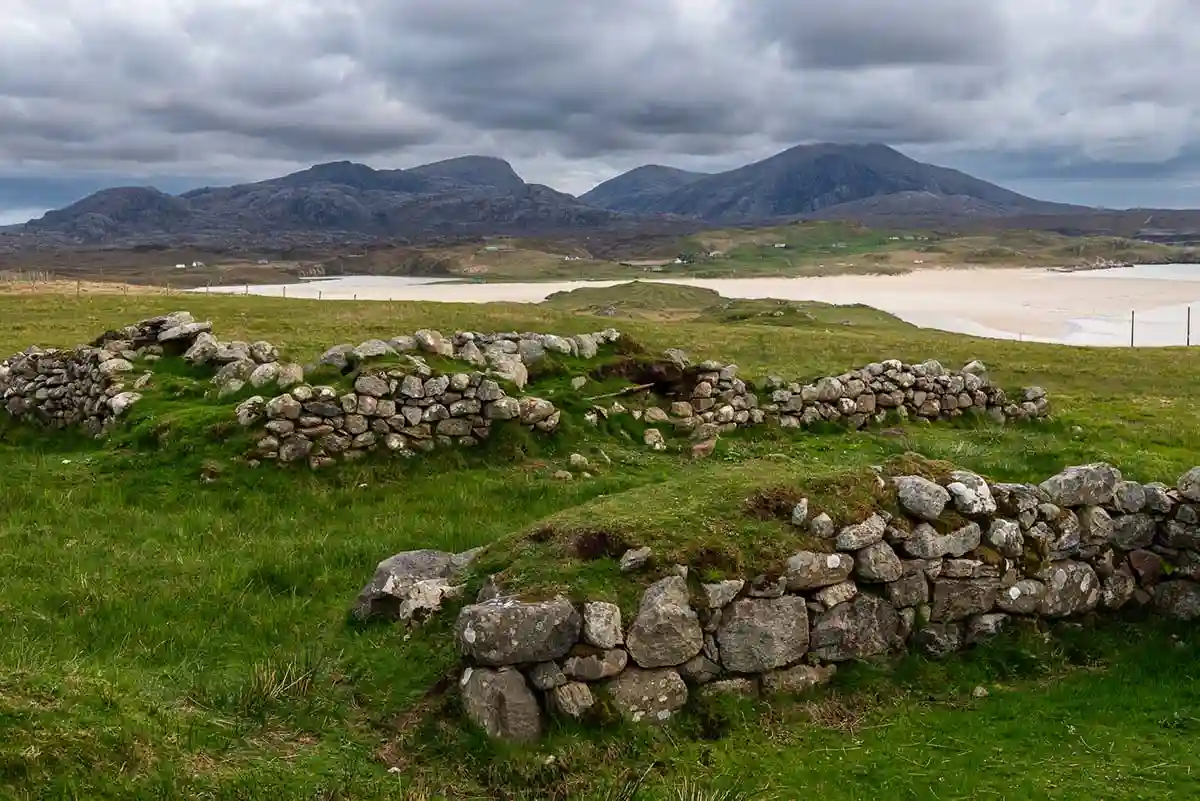
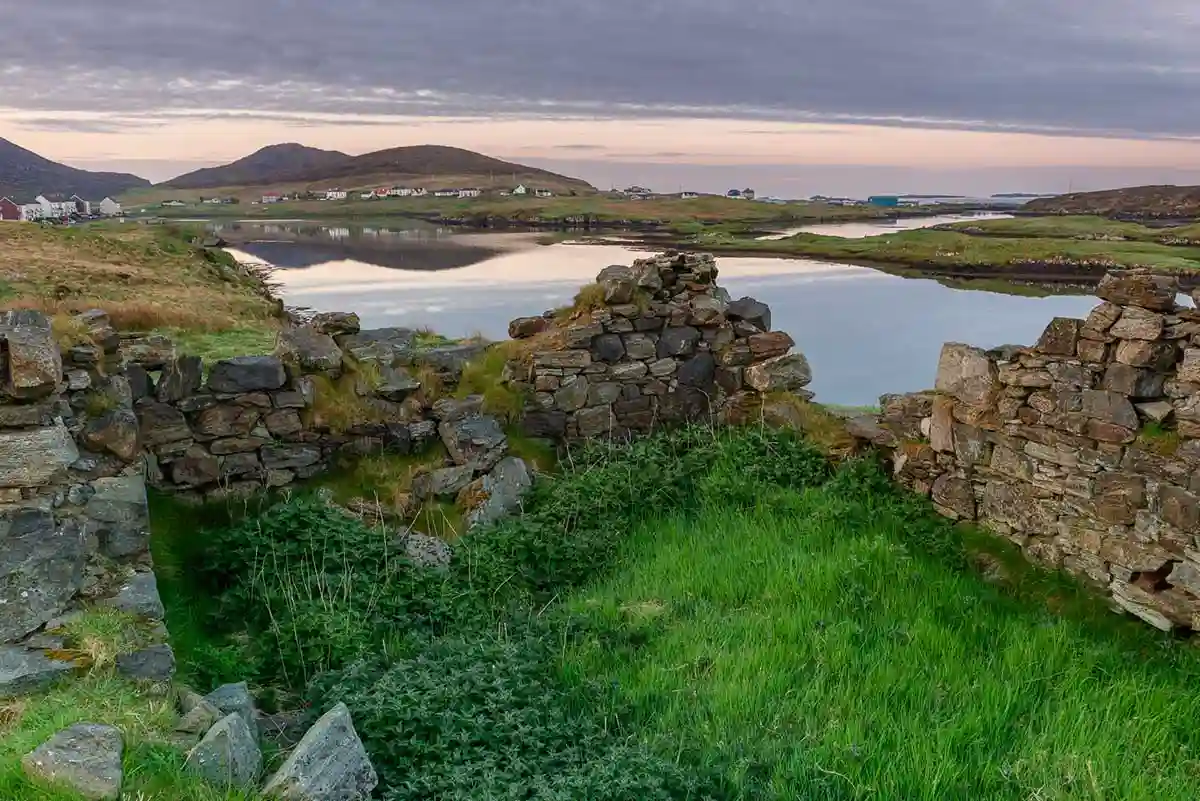
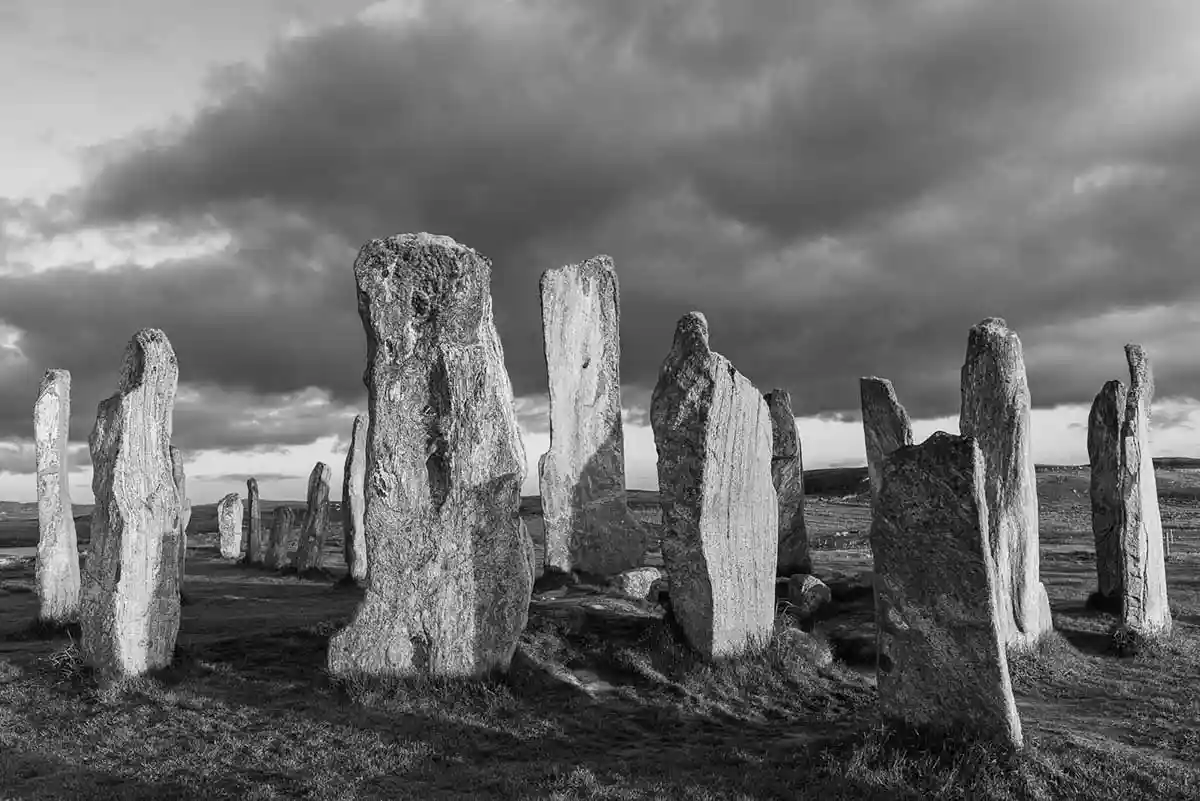
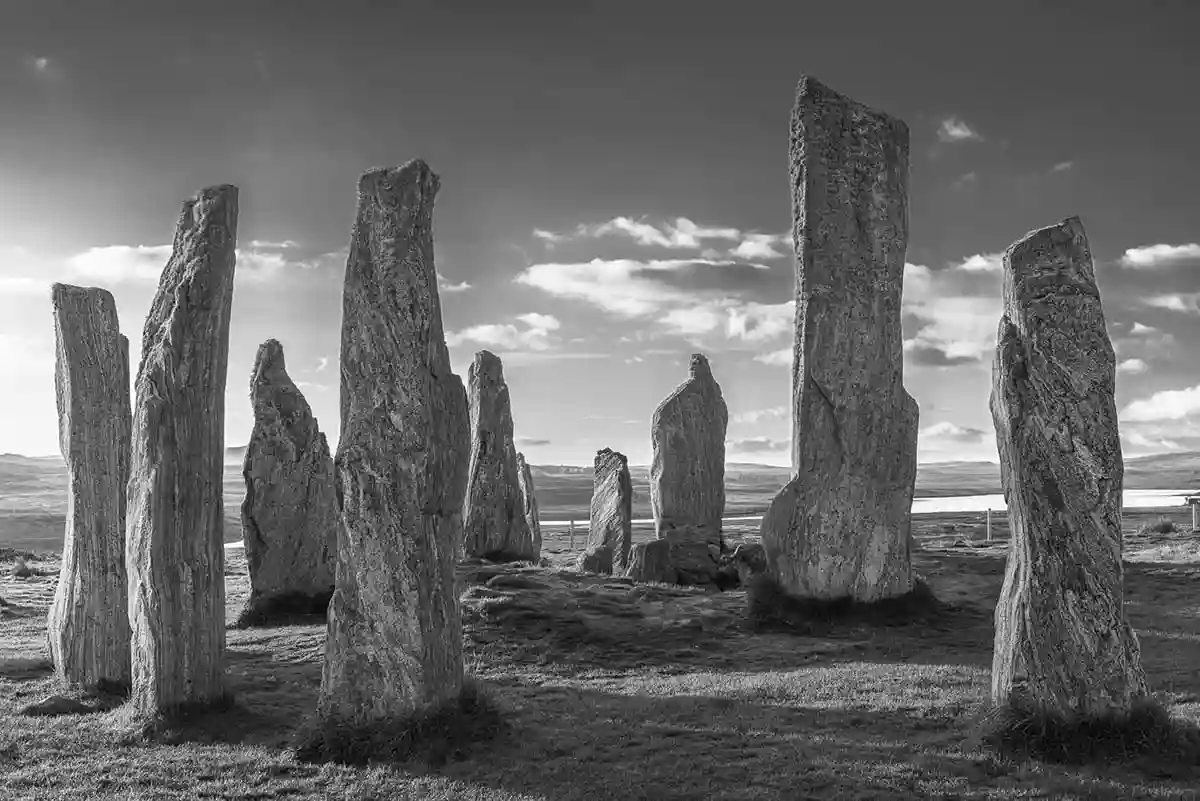
Harris and Lewis are rich in history, with landscapes shaped by thousands of years of human presence. Most iconic are the Callanish Standing Stones, one of Britain’s most important and impressive prehistoric stone-circle complexes. Set amid sweeping moorlands and dramatic skies, they offer powerful photographic opportunities at sunrise, sunset or in mist and storm. Across the islands, traces of the past—including Iron Age brochs, Norse remains, abandoned crofts, peat-cutting grounds, traditional blackhouses and dry-stone walls—tell the story of a resilient culture and provide evocative subjects that complement the wider landscape.
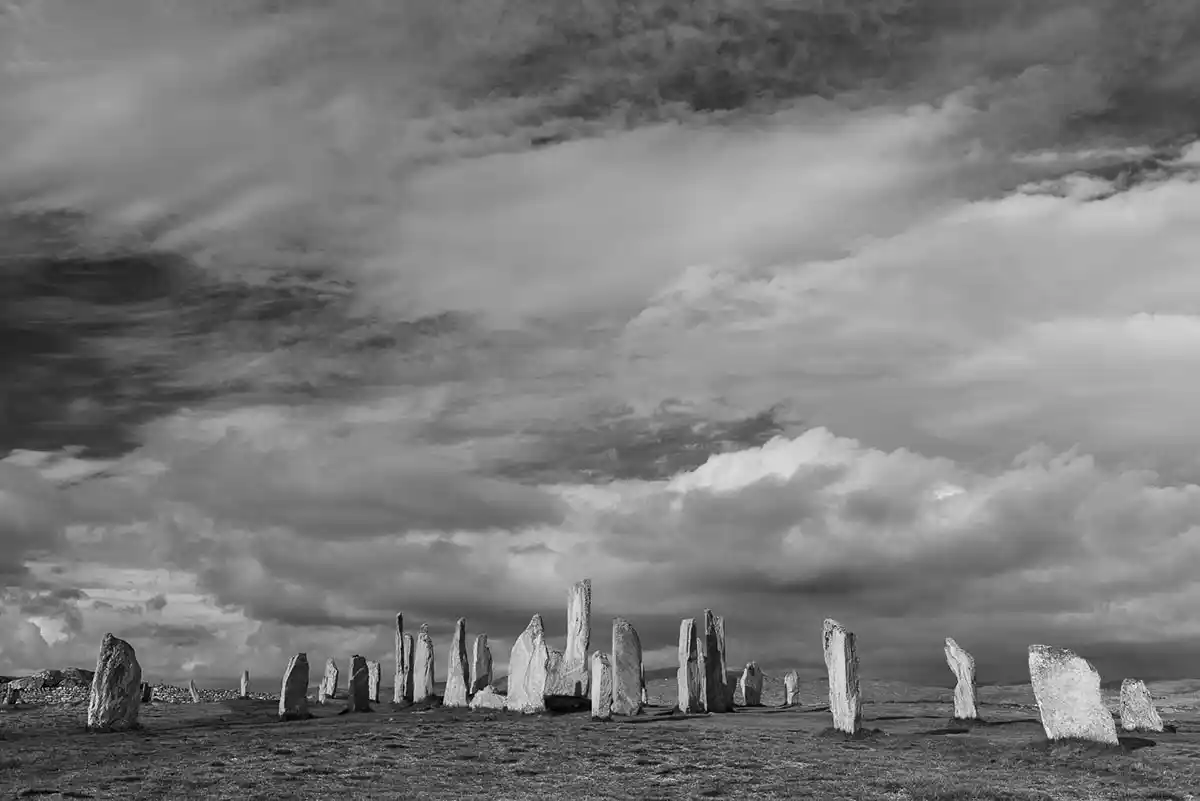
The Golden Road and East Harris Lochans
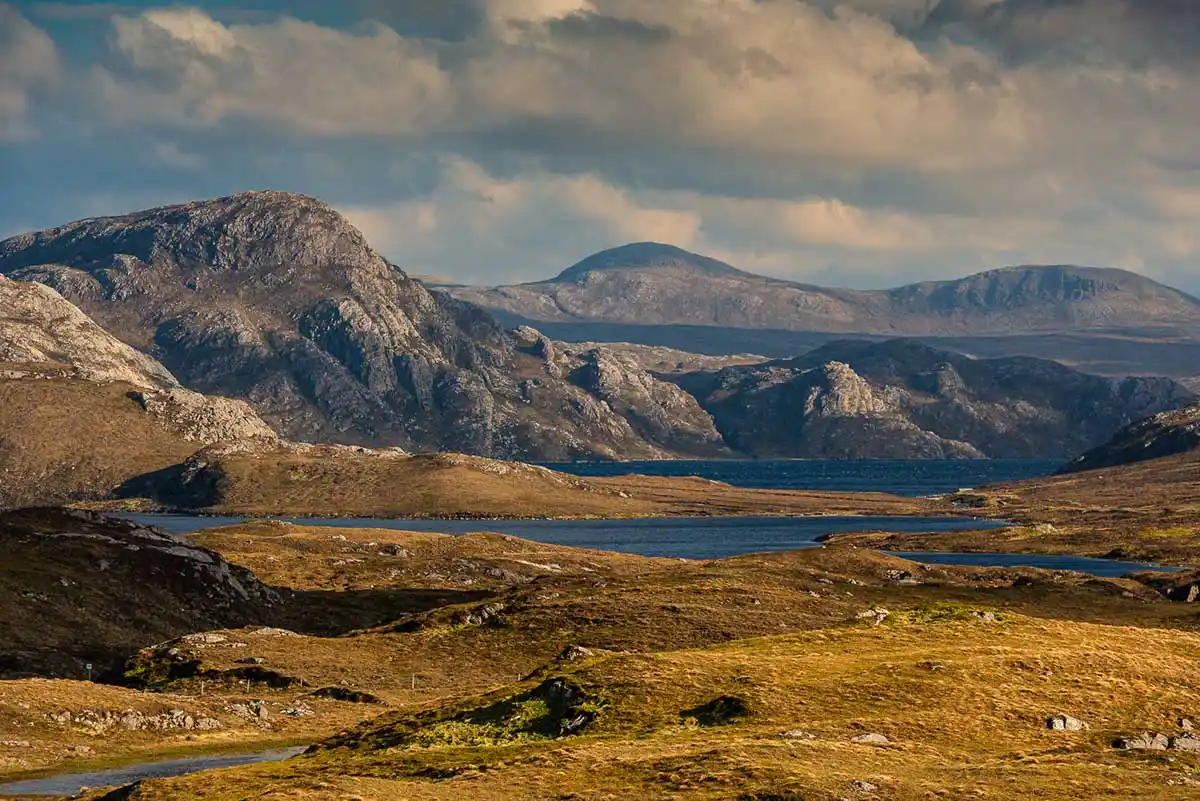
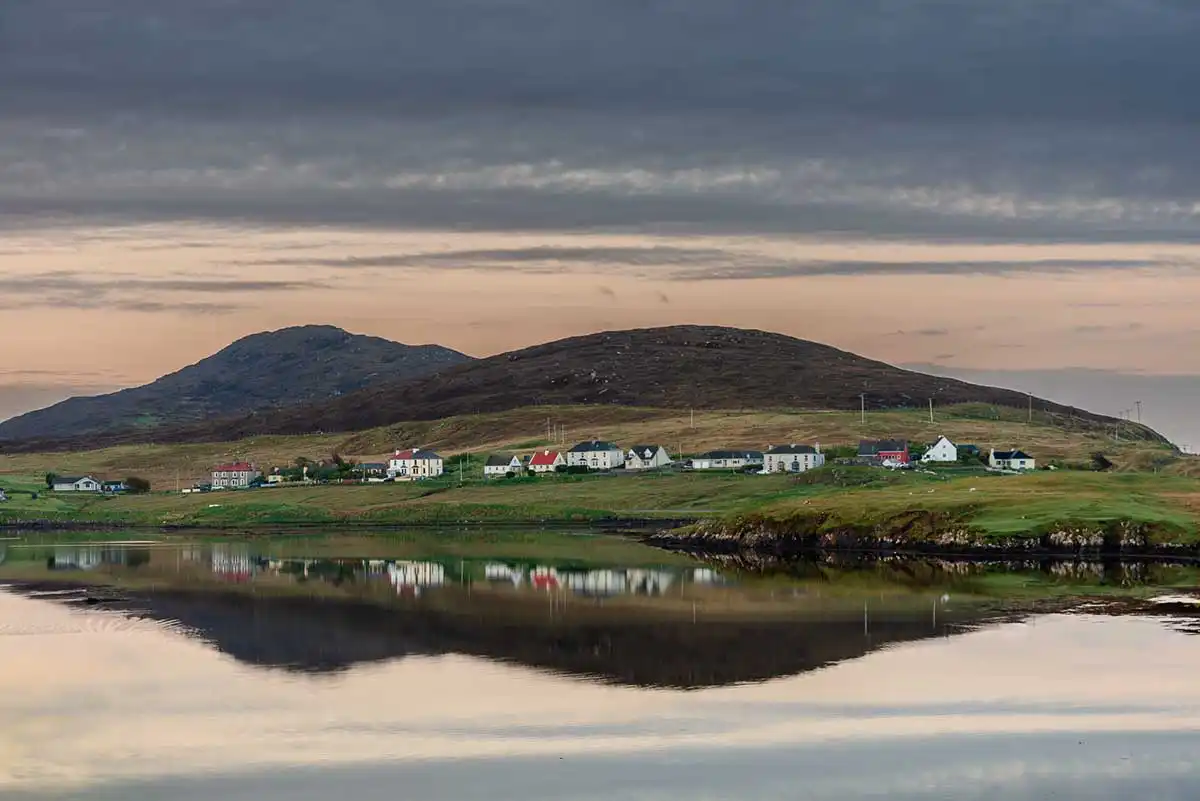
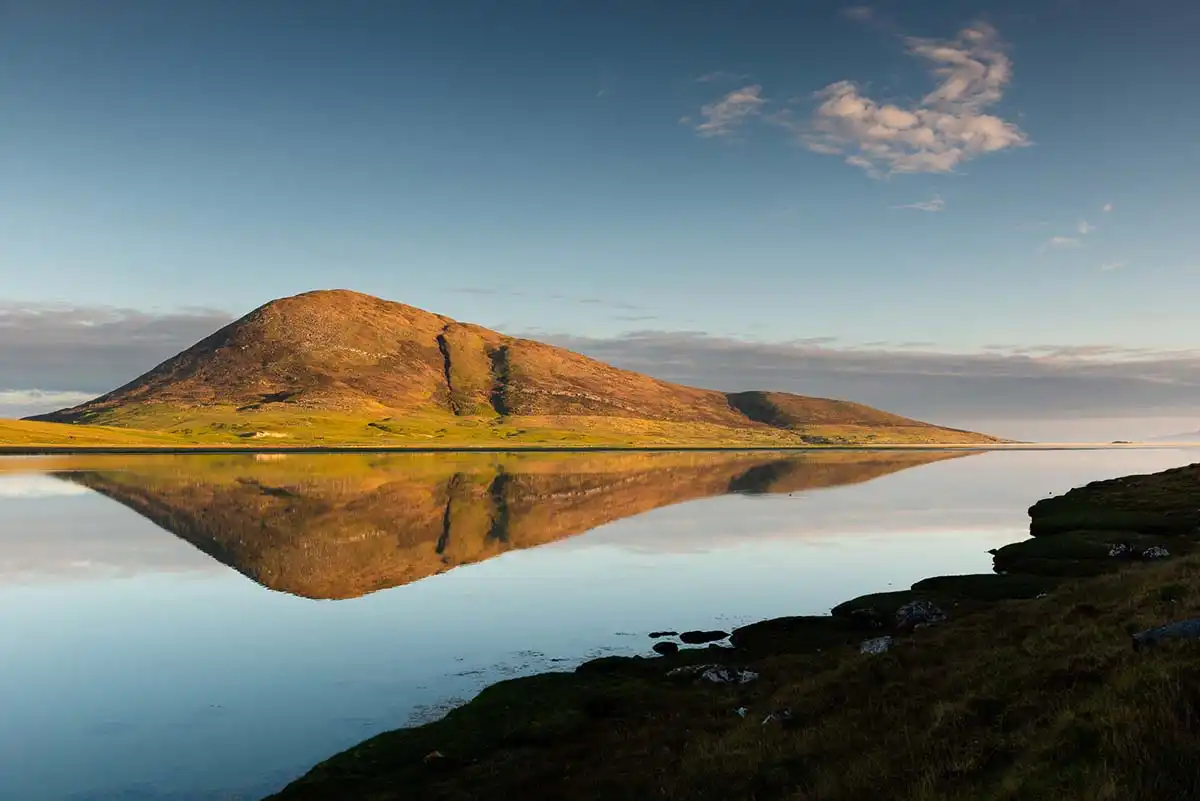
Winding along Harris’s rugged east coast, the Golden Road offers a striking contrast to the island’s famous beaches. This narrow, twisting route passes through a raw, elemental landscape of rocky outcrops, hidden lochans and scattered crofting villages. The interplay of light on granite, reflections in still waters and the textures of this ancient terrain provide endless photographic inspiration. It is a place for slow exploration, where every turn reveals new compositions and quiet beauty.
Why This Tour Is Ideal for Landscape Photographers
This Outer Hebrides photography tour is suitable for photographers of all abilities who want plenty of time in the field, expert guidance and access to some of Scotland’s most dramatic landscapes.
With a flexible itinerary, we can make the most of the light, weather and tides, returning to key locations when conditions are at their best. You will benefit from personal guidance from Garth Lenz, along with practical support with composition, filters, long-exposure photography and image development.
If you want to strengthen your landscape photography while working in one of Scotland’s most inspiring locations, this tour is for you.
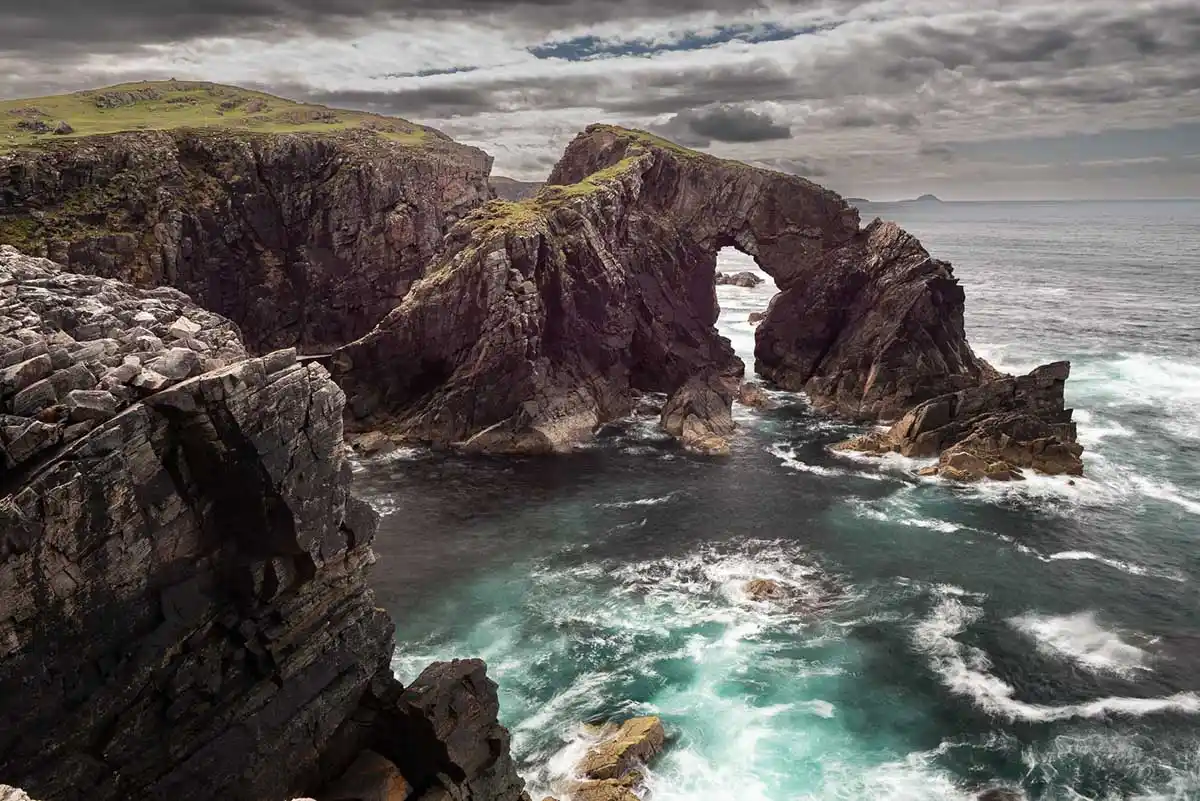
Meet Your Photography Guide
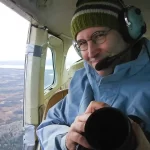
Garth Lenz is an award-winning fine-art photographer and environmental photojournalist based on the west coast of Canada. His work has been published by major international outlets including National Geographic (see Garth Lenz in National Geographic), The Guardian and The New York Times. He has received recognition in competitions including Wildlife Photographer of the Year, the International Photography Awards and Prix de la Photographie Paris. On this Scotland photography tour, Garth brings not only extensive field expertise but also a strong eye for narrative, mood, composition and personal expression in landscape photography.
What We Offer on This Photography Tour
- Opportunities to photograph spectacular landscapes in peaceful surroundings
- Opportunities to photograph historic sites, crofting landscapes and natural details alongside the wider scenery
- Expert guidance from professional landscape photographer Garth Lenz
- Personal guidance tailored to your photographic interests and creative goals
- Image-review sessions and constructive feedback during the tour
- Practical tuition in composition, exposure, filter use, long-exposure photography and image editing
- A pre-trip participant meeting to help you prepare
Is This Harris & Lewis Photography Tour Right for You?
- You see this trip as a unique opportunity to photograph landscapes ranging from the dramatic to the serene alongside acclaimed photographer Garth Lenz
- You want to develop your creativity and visual storytelling under the guidance of an expert photographer
- You have a particular interest in dramatic coastal landscapes, seascapes, Neolithic monuments and peaceful beaches
- You enjoy the challenge of photographing in rapidly changing conditions of sun, rain and wind
- You want to learn how to respond to changing light and improve your use of filters, photographic techniques and post-processing
- You enjoy photographing in a small group of like-minded people
- You value an efficiently planned itinerary that maximises time in the field
Itinerary – Landscape Photography Tour Outer Hebrides
This itinerary is intentionally flexible to accommodate changing weather conditions, tides, and the creative flow of the group. The emphasis is on making the most of the Outer Hebrides’ dramatic and ever-changing light, which means daily plans will be adapted on location.
Day 1: Arrival in Stornoway & Transfer to Tarbert (Isle of Harris)
We will meet in Stornoway at approximately 2:00pm. Garth will collect participants from either Stornoway Airport or the ferry terminal, depending on their travel arrangements, before transferring the group by minibus to our base in Tarbert on the Isle of Harris.
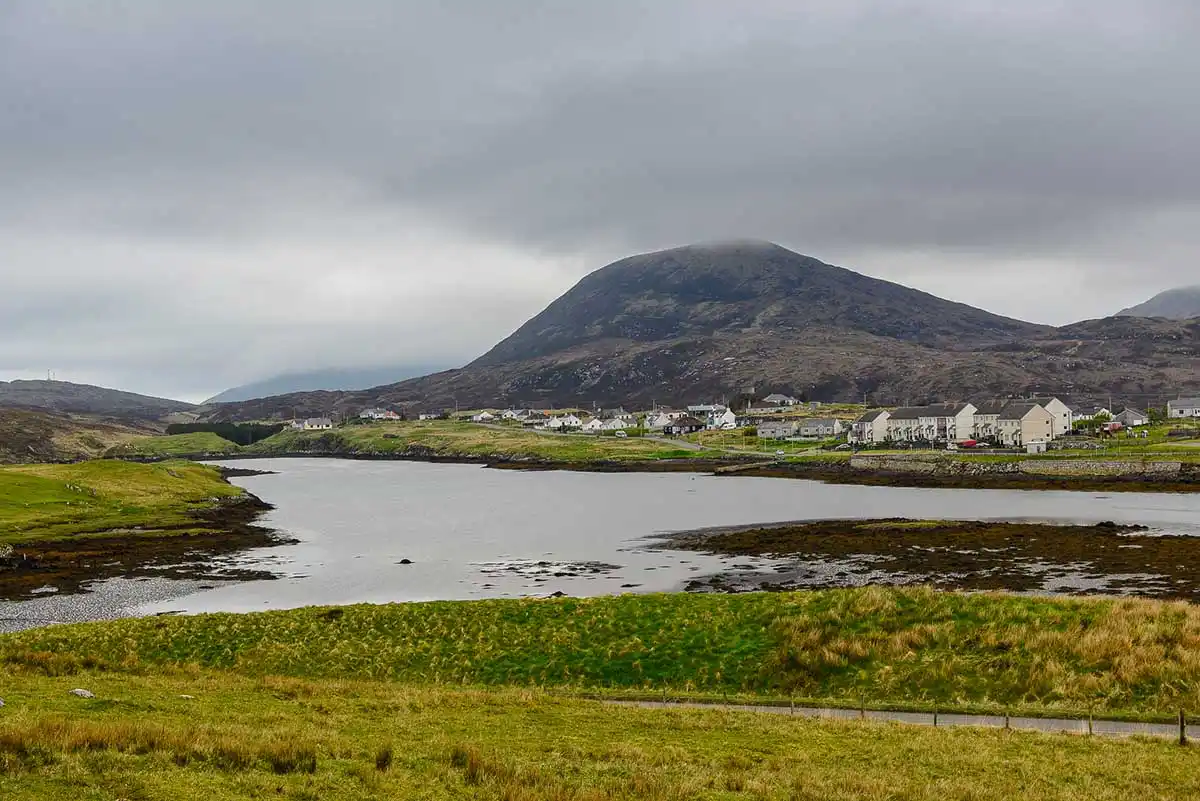
The journey takes approximately one hour and passes through a wild and ever-changing landscape of open moorland, scattered lochans, rocky hills and distant views towards the Atlantic.
On arrival at our accommodation, you will have time to settle in before we gather for a welcome dinner and an informal group introduction, during which you can share your personal photographic goals for the week.
Garth will then introduce the key photographic themes of the workshop and outline the range of locations we may visit during our stay.
Depending on arrival times and conditions, there may also be an opportunity for a short local sunset photography session before dinner.
Days 2–6: Immersive Photography Across Lewis & Harris
Each day we will plan our photography sessions in response to weather, light, tides, and the creative interests of the group, ensuring we are always working in the best possible conditions.
The Outer Hebrides are renowned for their constantly shifting atmosphere, and flexibility will be key to making the most of every opportunity.
Throughout the workshop, Garth will provide individual tuition and creative guidance in the field, as well as during evening sessions. There will be plenty of opportunity to develop skills in composition, light, storytelling, long exposure, filter use, and post-processing.
Locations we may explore include:
Luskentyre, Seilebost, Scarista and Horgabost
These world-famous beaches on South Harris offer sweeping white sands, turquoise waters, and sculpted dunes. They are ideal for minimalist compositions, long exposures, and working with constantly changing light and weather.
Callanish Standing Stones
One of Britain’s most iconic prehistoric sites, the Callanish Stones stand dramatically on the moorland, offering powerful photographic opportunities, especially in mist, storm light, or low sun.
Mangersta and the west coast of Lewis
The rugged cliffs and sculptural sea stacks of Mangersta provide dramatic seascape opportunities, where Atlantic swells and weather create powerful, dynamic conditions.
Stac a’ Phris and the Butt of Lewis
From natural sea arches to wild lighthouse headlands, this coastline offers some of the most dramatic coastal scenery in the Hebrides, perfect for powerful compositions and storm-driven imagery.
The Golden Road
This winding coastal route on Harris passes through granite landscapes, hidden lochans, and small crofting settlements. It is ideal for slower, more intimate landscape photography.
North Harris mountains and inland lochans
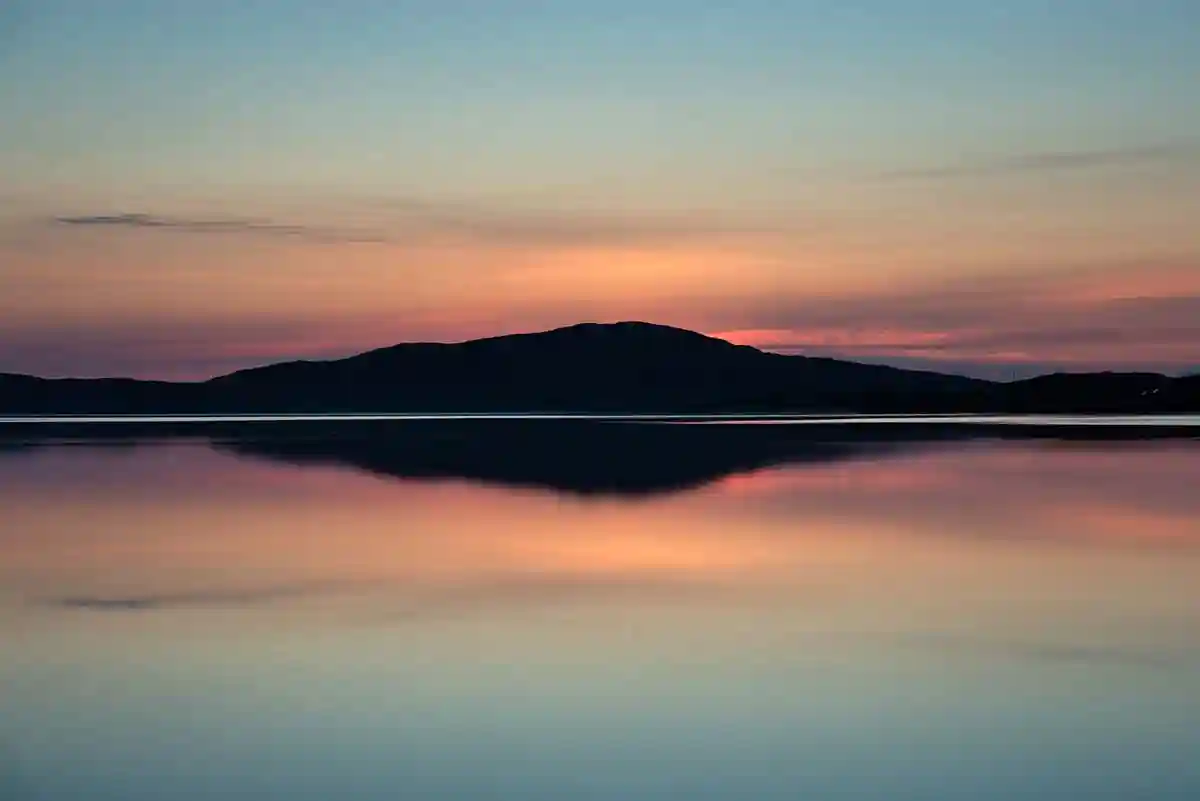
A quieter, more elemental landscape of mountains, water, and reflection, offering opportunities for atmospheric and contemplative imagery.
Abandoned crofts, peatlands and stone walls
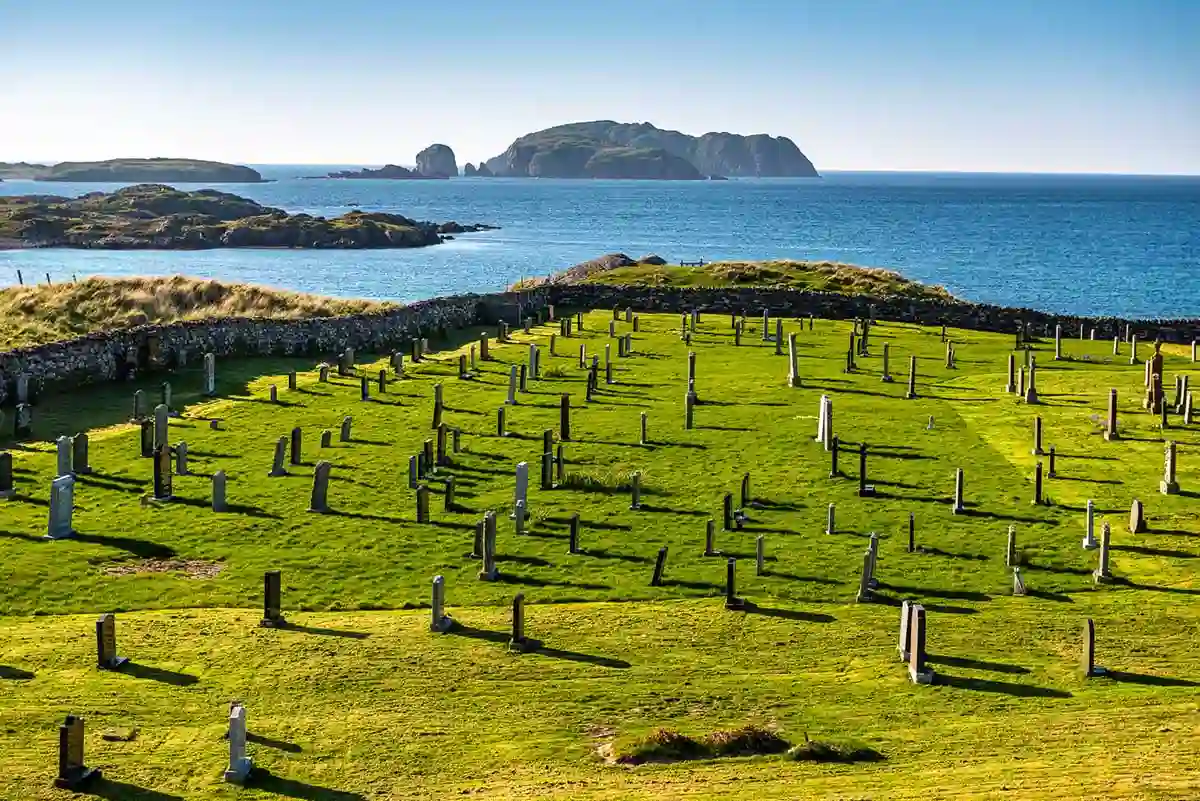
Scattered throughout the islands are traces of human history, including abandoned settlements, peat-cutting landscapes, and old stone walls, all of which provide strong storytelling elements.
Rodel and Northton Salt Marshes
These quieter coastal areas offer abstract shapes, textures, and subtle compositions, perfect for a more intimate photographic approach.
Hidden lochans and abstract details
Throughout the week we will also focus on smaller scenes such as lochans, grasses, rock patterns, and water textures, helping to refine observation and develop a more personal photographic vision.
Some sessions will focus on grand, dramatic landscapes, while others will encourage slower, more detailed and contemplative work. Evenings will be used to review images, share experiences, discuss techniques, and plan the following day.
Day 7: Departure from Stornoway
After a final breakfast together, we will travel by minibus back to Stornoway Airport for return flights home.
You will leave with a collection of powerful images, improved creative skills, and lasting memories from a week immersed in one of Europe’s most atmospheric and visually striking landscapes.
Please note:
This is a general outline of how the workshop may unfold. Each day’s schedule and locations will be adapted in response to weather, light, tide conditions, and the creative interests of the group. Our aim is always to maximise photographic opportunities and make full use of the Hebrides’ constantly changing conditions. Plans will be reviewed and adjusted each evening for the following day.
Cost
This trip can be booked starting from £2,495 based on a shared twin room.
Single Room Supplement: £150
Room Options
- 1 person – in a shared twin room:
If you book this option, you will share a room with another person of the same gender. The room will have separate beds.
If a roommate of the same gender is unavailable, the £150 single-room supplement will apply for a private room. - 2 people – twin or double room:
Booking a twin or double room is ideal for couples or two friends travelling together.
Please indicate in the comments field when booking whether you would prefer a double bed or twin beds. -
1 person – single room:
This room is for your sole use. A single-room supplement applies.
You may also be allocated a twin room for sole occupancy—in both cases, the same supplement applies.
Payment
Booking your stay is easy and effortless. Simply reserve online and we’ll send your invoice within seven days. You can pay by bank transfer, debit card or credit card, whichever suits you best. A 20% deposit secures your place, and the remaining balance is due eight weeks before your stay.
What is Included
- Transfers to and from Stornoway Airport
- Six nights’ accommodation
- All breakfasts and a welcome dinner on the first evening
- All local transport during the trip
- Guidance from a professional landscape photographer
- Pre-trip participant meeting
- On-location image-review sessions
What is Not Included
- Flights and ferries (we will advise on specific routes and schedules upon booking)
- Lunches and all dinners except the welcome dinner
- Personal purchases
- Alcoholic and soft drinks
- Travel and cancellation insurance
Practical Information for Your Photography Trip
Participants Meeting
Prior to departure, we will host an online participants’ meeting. This is an opportunity to meet your fellow travellers and tour leader, and to ask any questions.
Accommodation
We’ll be staying for the full duration in a warm and comfortable guesthouse in Tarbert, ideally located for exploring both Harris and Lewis. The accommodation is well suited to the needs of photographers, including flexible meal times and space for image review and group discussion.
Physical Requirements
This trip is not physically demanding — we won’t be covering long distances on foot or climbing steep mountains. However, the rough terrain and rapidly changing weather conditions can feel challenging at times. It is possible to experience three seasons in one day.
Travel Arrangements
The tour begins and ends at Stornoway Airport, where you will be met and transferred by car to and from the accommodation. You will need to arrange your own travel to Stornoway, either by air or by ferry from Ullapool. Once the minimum number of participants has been confirmed, we will send you our recommended travel options.
Local Transportation and Flights
Transport during the trip will be by minibus or passenger cars.
Required Equipment and Materials
- Cameras (+ video capability)
- Lenses: A range of wide-angle lenses is best (24–70mm is ideal)
- Tripod / Monopod
- Cable or wireless shutter release
- Beanbag / Rice bag
- Sufficient batteries + chargers
- Sufficient memory cards + card reader
- Rain protection for your camera and lens
- Camera manual
- Spare batteries (for flash, remote control, etc.)
- Good camera bag (mind carry-on dimensions!) with a rain cover
- Lens cloth & air blower (for dust removal)
- Filters: Polarising, neutral density (ND), graduated ND, etc.
- Travel adapter (and optionally a power strip)
- Optional: Laptop + cables (including USB)
- Optional: External hard drive / SSD (2x, based on what you expect to need)
Baggage
When arranging your flights, please carefully review the allowances for both checked baggage and hand luggage on your outbound and return journeys, as weight and size restrictions apply. Full details can be found on your airline’s website.
If necessary, smaller items such as lenses, camera bodies and spare batteries may be carried in the pockets of a large coat or photography vest, as these are not typically weighed. Please note that adherence to baggage regulations remains your own responsibility.
To make travel easier, both on the flight and during photography outings on the islands, it’s important to keep your luggage to a minimum. Soft bags or flexible suitcases are preferable, as they are easier to stack and transport.
Climate and Clothing
In March, on the Isles of Lewis and Harris, you can experience several seasons in a single day, with periods of sunshine, rain and strong winds. These rapidly changing conditions are part of what makes the islands so rewarding for landscape photographers, creating dramatic skies and exceptional light. Temperatures are typically between 7°C and 11°C, but the wind and rain can make it feel considerably colder, so warm clothing is essential.
- Dressing strategy: Wear several warm layers so you can adjust easily as conditions change.
- Essentials: Bring a warm, windproof and waterproof jacket, waterproof trousers and sturdy hiking boots. A hat and gloves are also strongly recommended.
- Recommended: If you have enough space in your luggage, consider bringing wellington boots for photography sessions at the water’s edge.
Vaccinations
For the latest information on mandatory or recommended vaccinations, please visit your government’s official travel advice website.
Passport and Visa
International travellers must carry the appropriate travel documents for entry into the UK. Depending on your nationality and immigration status, you may need a visa or Electronic Travel Authorisation (ETA). Please check the official UK government guidance before travelling.
BOOK YOUR TOUR HERE
Hold your place for free
Hold Your Place for Free
Not quite ready to book? You may need time to check your availability, speak to your employer or discuss the trip with your travel companion. You can request a free, no-obligation provisional reservation through our website, by email or by phone.
How long will we hold your place?
- If the trip departs within 10 weeks, your provisional reservation will be valid for 48 hours.
- If the trip departs in 10 weeks or more, your provisional reservation will be valid for seven days.
Subject to availability, we will provisionally reserve your place for this period. If another customer wishes to book the final available place, we will contact you and give you the opportunity to confirm your booking.
There is no obligation to book. If you do not confirm before the provisional reservation expires, it will automatically be released.
Book with Confidence
In the unlikely event that Nature Talks UK cancels your trip, we will contact you promptly and provide the refund to which you are entitled under our booking conditions and applicable UK consumer law.
| Spring Landscape Photography Tour Harris and Lewis | |
| Departure | 13-03-2027 |
| Return | 19-03-2027 |
| Travel duration | 7 days |
| Guaranteed departure | Yes |
| Available places | 5 |
| Price | From £2495 |
| Max participants | 7 |
| Included |
|---|
|
| Not Included |
|---|
|
Photo guidance by Garth Lenz
Focus on storytelling
Emphasis on creativity
Spectacular rocky coasts
Natural beaches and dunes
Harris mountains
Dramatic atmosphere
Plenty of effective photo opportunities
Atmospheric and welcoming hotel
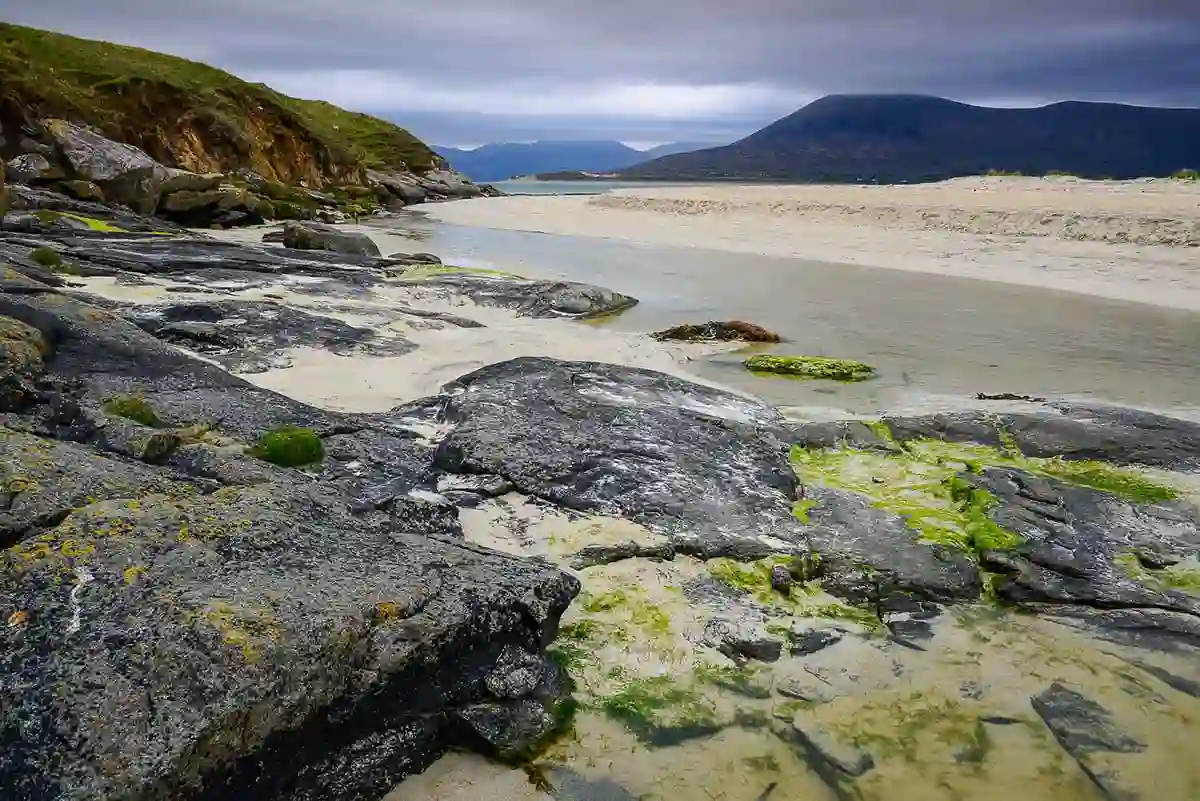
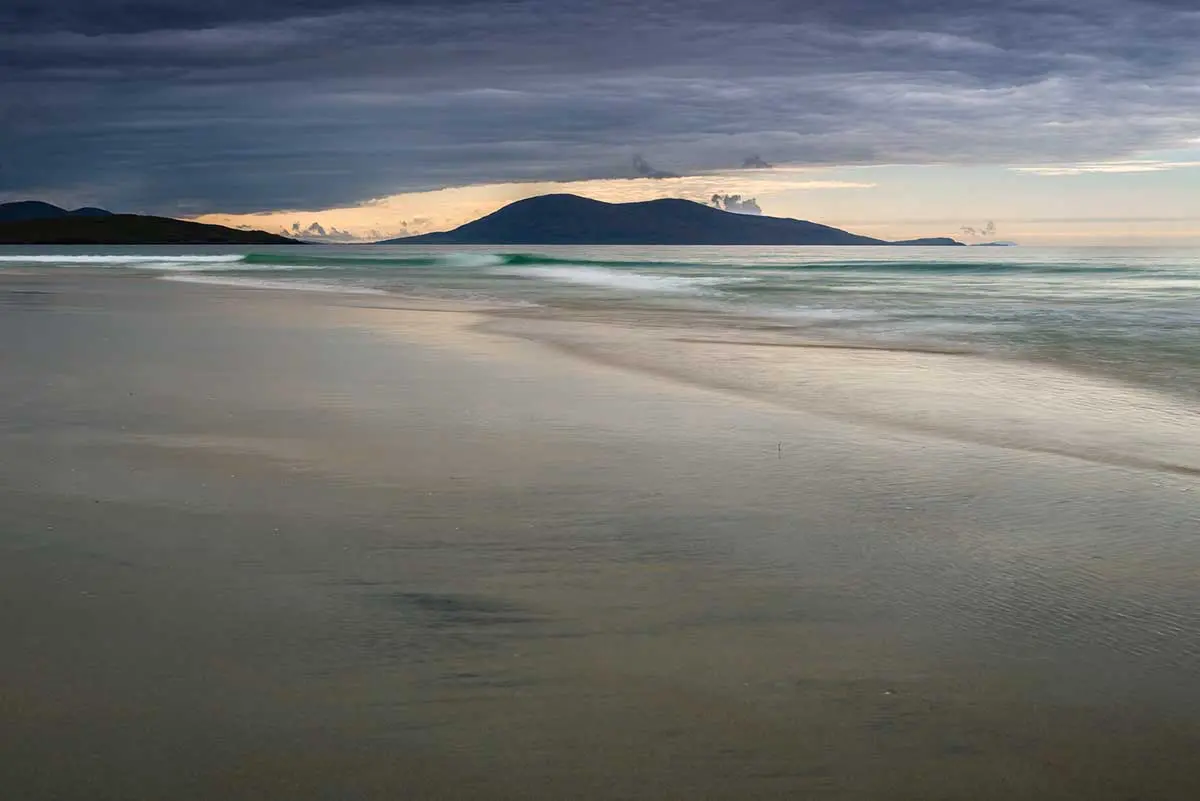
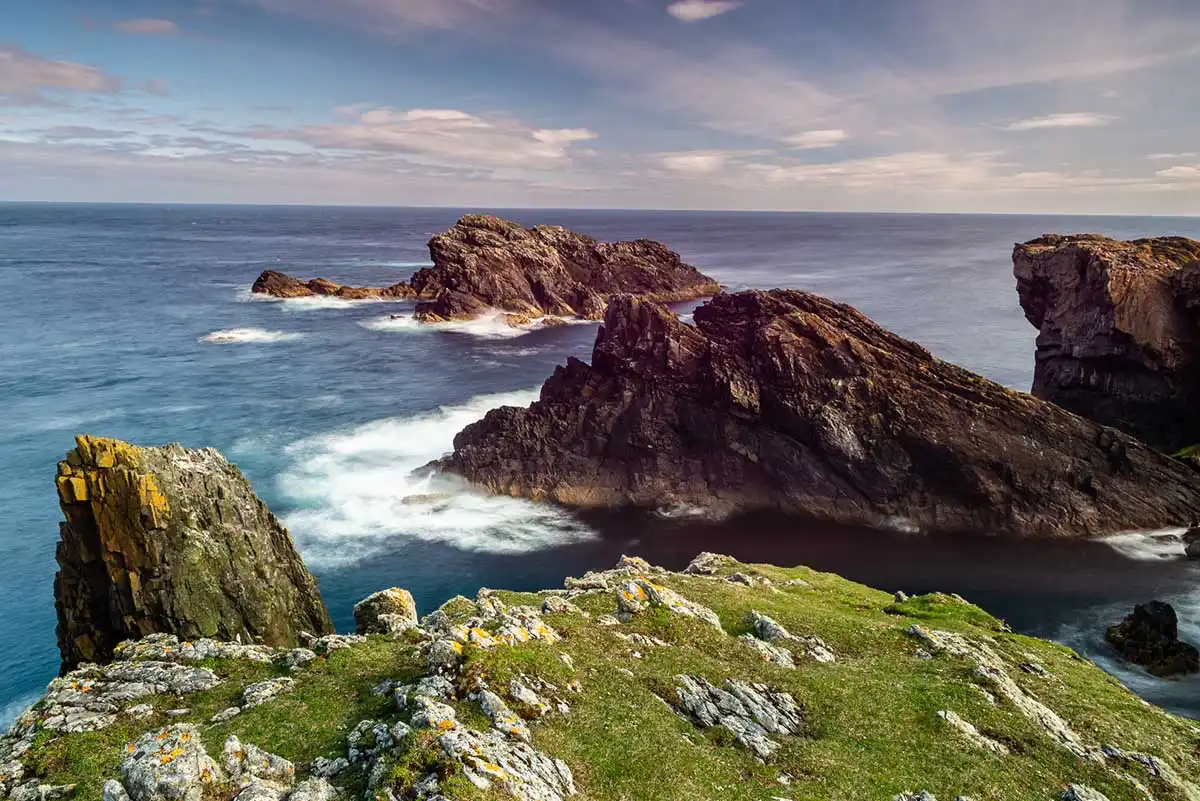
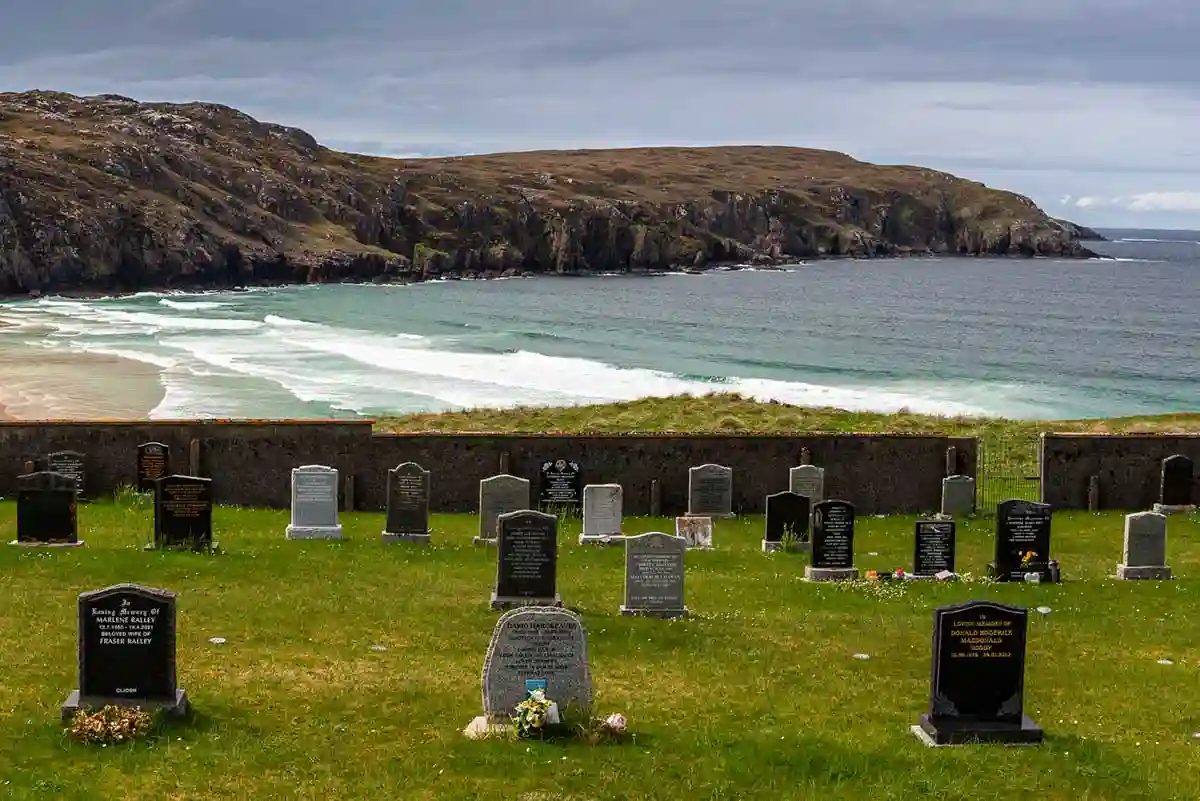
Photo Gallery
Other photo tours
-
Richmond Park Deer Rut Photography Workshop
£139.00 Select options This product has multiple variants. The options may be chosen on the product page -
Photography Tour Isle of Mull
£2,199.00 Select options This product has multiple variants. The options may be chosen on the product page -
Landscape Photography Tour Cairngorms
£2,398.00 Select options This product has multiple variants. The options may be chosen on the product page -
Hamsters & Ground Squirrels Photography Tour in Vienna
£895.00 Select options This product has multiple variants. The options may be chosen on the product page -
Hamsters & Ground Squirrels Photography Tour in Vienna
£895.00 Select options This product has multiple variants. The options may be chosen on the product page -
Slovenia Spring Bird Photography Tour
£2,550.00 Select options This product has multiple variants. The options may be chosen on the product page -
Slovenia Spring Bird Photography Tour
£2,550.00 Select options This product has multiple variants. The options may be chosen on the product page -
Photography Tour Harris and Lewis
£2,295.00 Select options This product has multiple variants. The options may be chosen on the product page -
Photography Tour Isle of Skye in Scotland
£2,295.00 Select options This product has multiple variants. The options may be chosen on the product page -
Photography Tour of Madagascar
£5,995.00 Select options This product has multiple variants. The options may be chosen on the product page -
Canada’s Wild Pacific Coast – Landscape Photography Tour
£3,795.00 Select options This product has multiple variants. The options may be chosen on the product page -
Wildlife Photography Tour South Africa
£6,995.00 Select options This product has multiple variants. The options may be chosen on the product page -
Bird Photography Tour to Slovenia: Floating Hides
£2,749.00 Select options This product has multiple variants. The options may be chosen on the product page -
Bird Photography Tour to Slovenia: Floating Hides
£2,749.00 Select options This product has multiple variants. The options may be chosen on the product page -
Photography Tour Isle of Mull
£2,199.00 Select options This product has multiple variants. The options may be chosen on the product page -
Wildlife Photography Holiday in Zimanga South Africa
£5,795.00 Select options This product has multiple variants. The options may be chosen on the product page -
Wildlife Photography Holiday in Zimanga South Africa
£5,595.00 Select options This product has multiple variants. The options may be chosen on the product page -
California Photo Tour – Bobcats, Elephant Seals, Whales & More
£4,395.00 Select options This product has multiple variants. The options may be chosen on the product page -
Photography Tour Isle of Mull
£2,199.00 Select options This product has multiple variants. The options may be chosen on the product page -
Photography Tour Isle of Mull
£2,199.00 Select options This product has multiple variants. The options may be chosen on the product page -
Finland Photography Trip: Bears, Black Grouse, Capercaillie
£1,950.00 Select options This product has multiple variants. The options may be chosen on the product page -
Wildlife Photography Tour of Finland’s Brown Bears & Cubs
£2,219.00 Select options This product has multiple variants. The options may be chosen on the product page -
Spring Landscape Photography Tour Harris and Lewis
£2,495.00 Select options This product has multiple variants. The options may be chosen on the product page -
Photography Tour Isle of Mull
£2,199.00 Select options This product has multiple variants. The options may be chosen on the product page -
Landscape Photography Tour Cairngorms
£2,398.00 Select options This product has multiple variants. The options may be chosen on the product page -
Photography tour Isle of Skye in Scotland
£2,295.00 Select options This product has multiple variants. The options may be chosen on the product page -
Photography tour Harris and Lewis
£2,495.00 Select options This product has multiple variants. The options may be chosen on the product page -
Wildlife Photography Tour of Finland’s Brown Bears & Cubs
£2,119.00 Select options This product has multiple variants. The options may be chosen on the product page -
Bird Photography Tour to Slovenia: Floating Hides
£2,749.00 Select options This product has multiple variants. The options may be chosen on the product page -
Bird Photography Tour Gambia & Senegal – A Bird Paradise in West Africa
£3,849.00 Select options This product has multiple variants. The options may be chosen on the product page